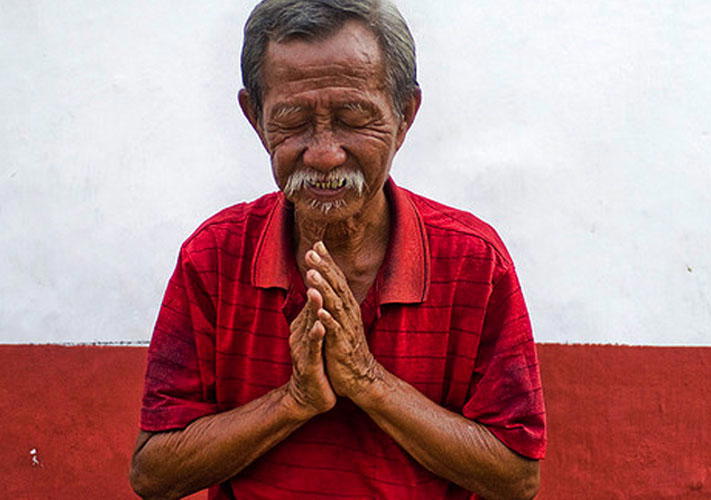
Religion Linked to Happiness in Poorer Societies
Researchers say that in societies of scarcity, religious people are happier than non religious people, but that in societies of abundance, religious and non religious people are about equally happy.

When measuring religion’s influence on personal happiness, what seems most important, say researchers at the University of Illinois, is the stressfulness of the society.
While previous studies of Americans had found that people with religion are happier than their secular counterparts, the researchers wanted to know:
- Whether the circumstances of a person’s society have any influence on the happiness effects of religion
- If religion makes people happier, why are people in economically developed regions of the world abandoning religion in record numbers?
To find out, they examined data from the 2005 to 2009 Gallup World Poll of people from more than 150 countries, which asked questions on religious feelings, life satisfaction, happiness, respect and negative and positive feelings.
The Results:
- Religion does make people happier if they are living in difficult or stressful environments, such as societies with scarce food, employment, education options, healthcare and security
- People living in richer societies with more social support were about equally happy, whether they defined themselves as religious or not
- In America, people in poorer states with less social support are the most religious, and religious people in these states do tend to have greater happiness than their secular neighbors.
- In America, Mississippi had the greatest religious participation, with 88% of people saying religion was important. Vermont had the lowest religious participation, which had only 44% calling themselves religious
- Globally, 68% of people call themselves religious
Commenting on the results, lead study author Ed Deiner said, “Circumstances predict religiousness. Difficult circumstances lead more strongly to people being religious. And in religious societies and in difficult circumstances, religious people are happier than nonreligious people. But in nonreligious societies or more benign societies where many people's needs are met, religious people aren't happier -- everyone's happier."
The full study results can be read in the Aug 1st edition of the Journal of Personality and Social Psychology.
More like this
Driving to Work Degrades Mental Health but Active Commuting Improves It
Want to be happier (and avoid relapse?) Well, leave the car at home and walk, cycle or bus to work. Researchers say active commuting leads to substantial psychological health gains.
Researchers Say We Can Teach Depressed People How to Be Happy
Can teaching happiness help to reduce symptoms of depression? Researchers at Duke University Medical School and The University of California, Riverside say probably, and as an added bonus, learning to incorporate activities like counting your blessings or writing thank you notes into a daily routine gets happiness results fast, and doesn’t cost much at all.

Study Finds that a Majority of ‘Locked In Syndrome’ Paralysis Patients Are Happy
People with locked in syndrome paralysis are mentally aware but unable to move anything in their bodies, with the exception of their eyes. Although it’s difficult to imagine living a satisfying life under such difficult conditions, a new study shows that an overwhelming number of patients with the disorder say they’re happy. People who have had the condition for a longer period of time were more likely to report happiness, which raises points for discussion in any debate about the validity of euthanasia.

Boost Happiness and Mental Health by Eating 7 Servings of Fruits and Vegetables per Day
Researchers say that people who eat more fruits and vegetables, up to a cap at 7 servings per day, are happier and have fewer mental health problems
The Secret to Happiness? A Few Extra Minutes of Exercise Each Day
Penn State researchers say you can improve your sense of well-being and life satisfaction by exercising just a little bit harder or for just a little bit longer than you normally do.