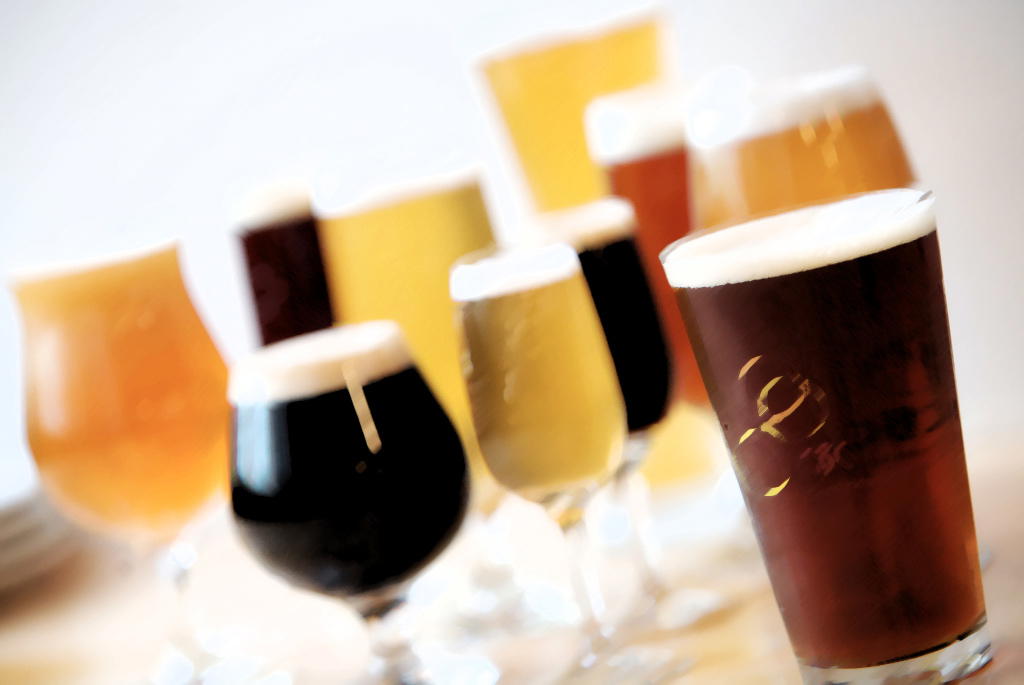
Controlling Your Drinking with Glassware? Some Types of Glasses Increase Drinking Rate, Other Types Slow You Down
People trying to reduce their alcohol consumption may want to pay attention to their glassware. Researchers at the University of Bristol say that people drinking alcohol out of curved glasses drink about twice as fast as people drinking alcohol out of straight-sided glassware.

Slowing your drinking rate decreases the amount you’ll likely consume in a single session, reduces the odds of drunkenness and reduces the chances of alcohol abuse problems.
It’s all good stuff, but for a lot of us, it’s easier said than done!
Fortunately, researchers in the UK may have stumbled upon a solution – drink out of the right types of glass and you’ll naturally drink much slower.
The Experiment
To see what influence glassware might exert over rate of consumption, the researchers had 160 social drinkers between the ages of 18 and 40 come in for 2 sessions to drink alcoholic and non alcoholic drinks in different types of glassware.
- In one session the subjects drank our of straight sided glasses
- In the next session, they drank out of curved sided glassware
The Results
- People consume alcoholic drinks out of curved-sided glassware almost twice as quickly as they do out of straight-sided glasses
- When shown pictures of straight-sided and curved-sided glasses holding varying quantities of liquid, the subjects were far less able to accurately determine when curved-sided glasses were half-full, although they had little difficulty on this task with straight-sided glasses.
Commentary
The researchers suggest that people’s inability to accurately gauge how much they’re drinking when using curved-sided glasses may account for the increase in drinking rate seen with this type of glassware.
Commenting on the take-home message of the results, lead study author Dr Angela Attwood said, “People often talk of 'pacing themselves' when drinking alcohol as a means of controlling levels of drunkenness, and I think the important point to take from our research is that the ability to pace effectively may be compromised when drinking from certain types of glasses."
The full study findings are published in the journal, PLoS One
More like this

For Alcohol Abusers, Roughly 50% of Addiction Therapists Say Moderation, Rather Than Abstinence, Is an Acceptable Goal
Roughly half of American addiction counselors now believe that moderating consumption, rather than abstinence, is an acceptable treatment goal for people with alcohol or drug abuse problems.

The More Often You Drink, the More Often You'll Binge Drink - Say Canadian Researchers
People who drink a glass of wine or a beer a day, a few times a week, binge drink more often than occasional drinkers.

6% of American 12 to 14 Year Olds Drink Alcohol in Any Given Month
According to the Substance Abuse and Mental Health Administration (SAMHSA), about 6% of kids between the ages of 12 and 14 are drinking alcohol in any given month – almost none of them are paying for it, and about 15% of them have parents who knowingly provide the booze.
The Latest Silicon Valley Trend: Free Beer and Wine at Work
To compensate for the long hours demanded by Silicon Valley start ups, many employers now offer free beer and wine on the job as a standard perk of employment.

Even Brain Damaged Alcoholics Can Expect Neural Recovery with Prolonged Sobriety
A study which proves that it is never too late to quit drinking shows that even severely brain damaged alcoholics (who suffer balance and walking problems from their neural deficits) will recover much balance and motor function in time.