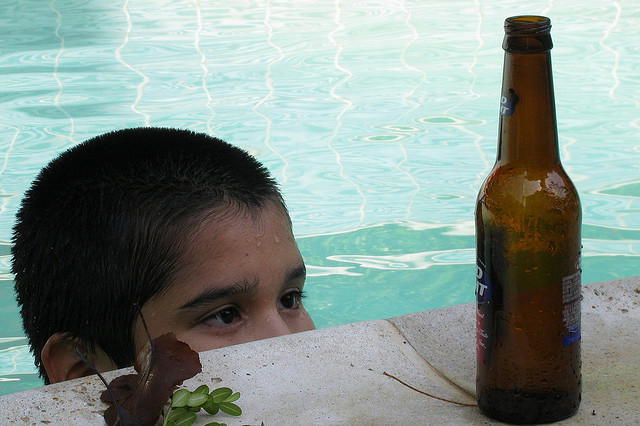
What about the Kids? How Addiction in the Family Affects Children
In the midst of active addiction and early recovery, the impact of the disease upon children is often underestimated. Thinking about how children are negatively affected gives us insight into how to support them.

Children born to alcoholic and addicted families tend to grow up fast.
Innocence doesn’t last long in the midst of insanity and destruction. A lot of kids learn to maintain appearances in a family that includes one or more addicts/alcoholics. Some learn to fend for themselves from necessity. Many raise their younger siblings or are even role reversed into raising their own parents. None come out unscathed.
Growing up as an “affected other” means learning early in life not to trust anyone and even more tragically, not to trust yourself. The child’s perceptions are negatively impacted from a young age. They learn self doubt from the cumulative force of well intentioned lies. “Dad’s taking a nap (he passed out).” “Mom’s working late (she’s out getting high).” “Grandma isn’t feeling good (she’s dope sick).”
Addiction leaves caregivers compromised. Some become emotionally unavailable. Some become increasingly undependable and some just leave. It’s not only the active addict who behaves in these ways. It’s also the non-addicted adults/partners/caregivers who take care of the addict, struggle with holding the family together, and/or who work two jobs to make ends meet.
What to Tell the Kids?
I’ve sat with countless recovering and active-using parents who ask me, “What do we tell the kids?” There’s no single answer to a question that big but the first thing I say is, “Don’t lie to them.”
Kids always know more than we think they do and they usually know more than we fear. Children are sponges. They absorb everything in their environment. I’ve worked with kids as young as four who understand that dad’s on his fourth scotch and it’s time to stay away from him. Kids notice the subtle changes in speech, body language, and mannerisms. What they lack in intellectual understanding they make up for with an intuitive sense of how things are (not how we pretend they are).
Learning Unhealthy Expectations
Addiction teaches children a variety of unhealthy expectations. They learn early on to value instant gratification because promises for the future don’t mean a thing. They learn not to get their hopes up and to ask for little or nothing. They learn to sacrifice what they want and deny what they need.
Addiction has its own language for children. “Yes” means maybe. “Maybe” means no. “Someday” means never and “I’m sorry” means nothing at all.
Addiction teaches children to know that the person they love is actually two people – the person they know when sober and the person they know under the influence. This teaches them to alter and limit their own behavior in response to unhealthy (and generally unspoken) demands from others. It teaches them to pretend and to be less honest, genuine, and expressive. It dictates that emotional vulnerability is dubious at best and unsafe at worst.
Kids and Recovery Attempts
Sometimes the child sees a period of abstinence or an attempt at recovery. Some will have it explained (most often poorly and with euphemisms, “Things are going to be better now”, “Dad’s doing much better these days.”). Most kids won’t get an explanation, (“We didn’t want them to worry”, “We were afraid to get their hopes up.”). Either way, for the kids it’s like waking up in a parallel universe. The people they feared are now friendly. The dynamics of the home are completely different. The expectations and the rules changed overnight and now they’re forced to adjust (again).
As difficult as it is for the family in the midst of early recovery, the wheels tend to come off the bus when relapse occurs. Most often parents try to hide it. Generally they don’t know what to tell the kids because they’re too busy reeling themselves.
Above All - Increase Stability
As a clinician, I have endless patience and compassion for children. They’re generally the most affected and the least empowered. I advocate honesty and clear communication because addiction overshadows the lives of people who dearly love each other and because the lingering effects are for many, lifelong.
Increasing stability for kids in the midst of addiction is extremely challenging and yet I know it is the intention of every loving parent. This is not a road to travel alone. I urge affected others of all ages not to struggle alone. Gather support from friends and family and reach out to 12 step programs in your area.
Editor’s picks

10 Things You Can Do to Support Your Loved One’s Recovery
Supporting recovery - you're probably unsure about what's helpful and appropriate. The list below may surprise you. Here's how you can help.

When Your Loved Ones Keep Relapsing
Supporting those who keep going back out: how to maintain hope and effectively cope when a loved one just can't seem to stay sober.

"My husband is an alcoholic... please, what can I do?"
Being trapped is most often a state of mind. Are you looking for answers that you know deep down don’t exist? The simple truth is hard to hear.

Considering Marriage or Commitment to a Person in Early Recovery
When thinking about marrying a person in early recovery, how can you know that recovery will last? Short answer is - you can't! But you can learn to accept your powerlessness over the situation, make your own life manageable and set healthy boundaries.

How Recovery Affects Relationships. Guidelines for Rebuilding
Recovery brings a lot of changes and upheaval. Couples can grow and thrive throughout recovery by being mindful, establishing boundaries and expressing needs.