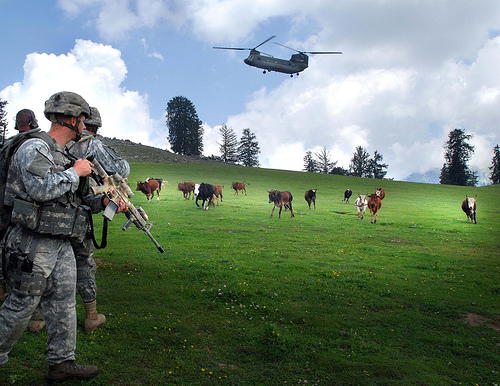
8 Years of War Causes a Sharp Increase in American Military Binge Drinking Rates
American soldiers have been at war and in active combat for 8 years, and the strains of such a long military deployment are taking a very human toll.

American Army substance abuse counselors diagnosed 1.15% of active Army soldiers as having either alcoholism or alcohol abuse behaviors; a percentage that has almost doubled from 2003, when only 0.61% met the diagnostic criteria for those disorders.
Marines too seem to be drowning their sorrows at a greater rate than in previous years, with statistics showing a 12% increase in the numbers of marines meeting the criteria for substance abuse problems since 2005.
Army Gen. Peter Chiarelli, the Vice Chief of Staff, urged senior commanders to deal aggressively with the problem of increasing substance abuse, acknowledging during a briefing that, "We're seeing a lot of alcohol consumption." He has called for increased intervention, substance abuse treatment and the use of punitive sanctions, including discharge, for those who break Army codes of alcohol conduct. Chiarelli has said that some officers might overlook problematic alcohol behavior in a need to keep combat readiness numbers high.
The Chairman of The Joint Chiefs of Staff, Admiral Michael Mullen, spoke to reporters about the situation on Friday, acknowledging the increasing abuse of alcohol and explaining a causal factor for the increased abuse as, “I can't believe the stress our people are under after eight years of combat isn't taking a toll."
Binge drinking is a part of American military culture. A study by The University of Minnesota and the CDC revealed that 43% of active duty soldiers had engaged in binge drinking within a month of being asked by study researchers researchers and that 20% of military personal binge drink once a week or more.
Military experts say that binge drinking is a big problem for soldiers serving tours of duty away from home and family, even in Muslim countries, where alcohol is less available off base. More frequent overseas rotations may be increasing the scale of the alcohol abuse problem, as frequent binge drinking puts a solider at a far higher risk for the development of alcoholism and other health conditions.
The Army is still reeling from the 142 soldier suicides during 2008, an all time record. Unfortunately, this year’s suicide rates are higher than even last year’s record breaking numbers. Gen. Chiarelli has said that he hopes that reducing problematic alcohol behaviors might decrease these suicide numbers.
More like this
20 Common Things People Realize When They Quit Drinking Alcohol
Of all the culturally conditioned behaviors we’ve mindlessly adopted, alcoholism is one of the most curious.

Alcohol Abstinence Reverses Brain Damage – But Treatment Must Be 2 Weeks or Longer to Take Advantage of Healing
Your brain heals quickly once you stop drinking and after a couple of weeks people start to see big improvements. Researchers say alcohol treatment needs to be at least this long to take advantage of this return of function.

Intervention Text Messages Get Heavy Drinking Young Adults to Reduce Their Consumption
Researchers in Pennsylvania say that text messages may be an effective delivery system for alcohol abuse interventions to heavy drinking young adults. Heavy drinking young adults drink substantially less when they get periodic text messages containing strategies to reduce consumption.
Working 50+ Hours Per Month Raises Alcohol Abuse Risk Dramatically
People who work 50 or more hours per week are as much as three times more likely to develop a problem with alcohol as those who are unemployed.

Survey Reveals That Boredom Drives British Teens to Drink
A British charity survey reveals that teenagers with nothing to do are likely to take advantage of low cost alcohol to get drunk over the summer holidays.