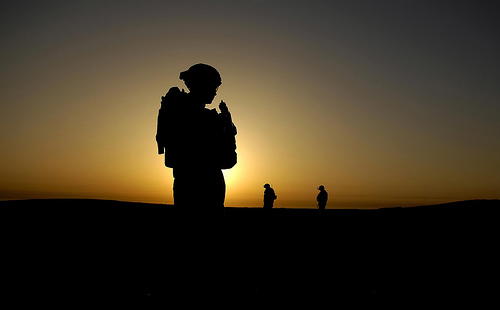
Researchers Say as Many as 35% of Returning Iraqi War Soldiers Will Have PTSD
Researchers out of Stanford University say that as many as 35% of returning American soldiers will experience PTSD and that the VA hospital system needs to increase mental health services capacity to meet the coming need for care.

Management science researchers say that the VA hospital system can expect to treat PTSD in as many as 35% of returning Iraqi war soldiers.
The researchers, out of Stanford University and the Naval Postgraduate School, say that the rapid pace of combat redeployment (a rate not seen since world war 2) has contributed to this sudden dramatic increase in PTSD occurrence rates amongst armed forces veterans.
To come up with a projected PTSD incidence rate, the researchers used mathematical models that computed the future rate using current PTSD prevalence rates among returning vets and redeployment data as two of many variables.
PTSD can take months or even years to emerge after stress exposure and so the projected rate of 35% doubles what current surveys of returning troops reveal.
They say that the VA hospital system, which is already strained in its ability to deliver mental health services, needs to increase capabilities to meet a coming increase in demand. Planning for capacity increases is complicated by the time delay between stress exposure and the emergence of symptoms, as well as by the redeployment overseas of some affected troops. The researchers say their model, which predicts a real need for services over the next years, can help the hospital administrators plan effective capacity increases.
The research report can be read in the journal, Management Science.
More like this
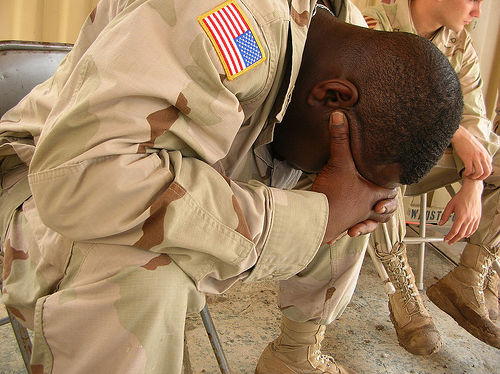
Secret Email Memo Urging V.A. Doctors to Under-Diagnose PTSD Angers Veterans
A Federal Judge in San Fransisco has reopened a case against the V.A. after reading an incriminating memo from one of the organization's doctors. A new hearing is scheduled for Tuesday.
More than a Third of Iraq and Afghanistan Vets Need Treatment for Mental Illness
Research compiled on veterans seeking treatment within the VA health care system reveals a dramatic increase in mental health disorders since the wars in Iraq and Afghanistan
Combat Vets More Likely to Abuse Alcohol than Experience PTSD
Alcohol abuse is the most prevalent mental health disorder experienced by British troops returning from combat, with depression coming in second - An estimated 27.2% of those troops suffer from at least one mental health disorder.
MRIs Can Predict Who Will Experience PTSD
Researchers out of Israel have shown that MRI technology can predict which soldiers are likely to experience PTSD after stress exposure.

Teen Stress Linked to Adult Mental Illnesses like Major Depression and Schizophrenia
For people already predisposed to mental illness (people with mental illness in the immediate family, for example) experiencing stress during adolescence likely increases the risk of experiencing mental illness as an adult.