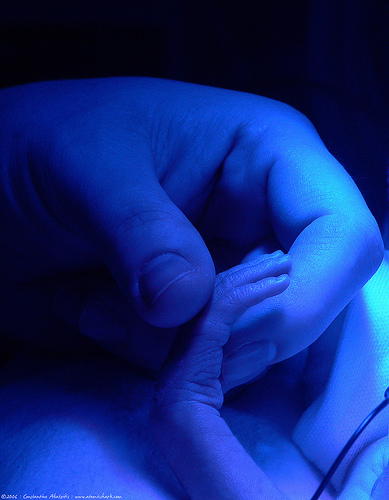
New Tool Lets Doctors Predict Postpartum Depression with 80% Accuracy
Spanish researchers say they’ve developed a medical model that predicts, with 80% accuracy, which women will experience postpartum depression after childbirth.

Postpartum depression (postnatal depression) is a clinical depressive disorder that affects 13% of women in the weeks and months after childbirth. The disorder can decrease parenting satisfaction, interfere with mother-child bonding and in severe cases, can even trigger suicidal thoughts or attempts.
If doctors could predict which women were most at risk of the mental illness, they could run early interventions that could reduce the severity of symptoms; so researchers at the Polytechnic University of Valencia set about developing a computational model that might assist in this prediction – and they say they’ve come up with a tool that predicts the disorder with 80% accuracy.
The model incorporates known risk factors for postpartum depression into a computational model. Risk factors include:
- Age at childbirth (the younger the age the greater the risk)
- Limited social support
- A previous familial history of mental illness
- Changes in emotion during childbirth
- A certain type of serotonin transport gene expression
- Neuroticism
- Not working during pregnancy
Lead researcher Salvador Tortajada, says that early detection of those at risk of postpartum depression might even, “make it possible to intervene to prevent it from developing among women at risk." Describing the next step needed, he says, "Now it needs clinical evaluation, and for psychiatrists to start to test it directly on patients in order to study the true potential of these tools."
The study has been published in the journal Methods of Information in Medicine.
More like this
New Adoptive Parents at Risk for Depression
Researchers at Purdue University say that just as new moms get postpartum depression, newly adoptive parents are at risk of postadoption depression – a condition caused largely by a parenting reality that doesn’t meet expectations.
Researchers Say Dietary Supplement May Help Cure Postpartum Depression
Canadian researchers at the Centre for Addiction and Mental Health (CAMH) in Toronto say they’ve figured out why some women succumb to postpartum depression after childbirth – and they say that they’re working on a dietary supplement that may well reduce the severity of the condition.

Social Contagion: Living with a Person at Risk of Depression May Increase Your Risk As Well
At certain periods in life, living with a person who uses maladaptive thinking styles increases your risk of depression. Fortunately, the opposite is also true.

Teen Stress Linked to Adult Mental Illnesses like Major Depression and Schizophrenia
For people already predisposed to mental illness (people with mental illness in the immediate family, for example) experiencing stress during adolescence likely increases the risk of experiencing mental illness as an adult.

The Link between Traumatic Brain Injuries (TBI) and Depression
Wondering what’s causing your depression? Have any concussions or other forms of brain injury in your past? Well, if you do it might explain the way you’re feeling, because having a brain injury, even a minor one, greatly increases your risks of depression – even years after the fact.