Police Hold Disabled Man on Suspicion of DUI. Suspicious Behaviors Actually a Result of Brain Injury, Not Intoxication
Ryan Dinsmore was arrested and held for 3 hours under suspicion of DWI. His disability led officers to think him intoxicated.

Ryan Dinsmore of Olympia Washington spent three hours in police custody in March under suspicion of DWI. Police arrested the man after observing what appeared to be intoxicated behaviors - behaviors that Dinsmore explained to police were the result of a traumatic brain injury some years earlier.
Dinsmore, on March 15th, pulled his car over to ask directions from a stopped police officer. The officer, after observing his demeanor, questioned him on his past day use of drugs or alcohol, and not satisfied with the brain injury explanation, issued a field sobriety test which the handicapped man failed.
Dinsmore was taken to the police station and given a breathalyzer test, on which he blew a 0.00. Police then questioned him on the use of other CNS depressants and escorted him to a local hospital for a blood test, which revealed no drugs or alcohol in the body.
He was released from custody without charge after approximately 3 hours.
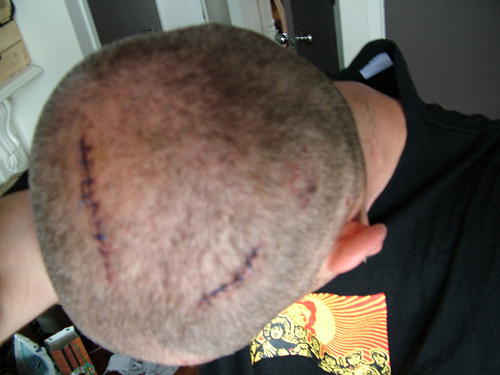
Dinsmore's mom is angry about the way her son was treated, and said that "He showed them the scar on the back of his head; it's horrible — because you have a disability, that you're guilty of something."
Dinsmore said that the experience was "humiliating" and that he was handcuffed and treated like "a common criminal".
Cmdr. Tor Bjornstad of the Olympia police countered that based on the available evidence and the circumstances, the arresting officers followed protocols and acted in a reasonable manner. Bjornstad did say that he felt it very unfortunate for Dinsmore to have had such an experience.
Gene Van den Bosch, the director of the Washington Brain Injury Association, says that Dinsmore's case is certainly not unique, and says that he has heard of many similar cases – and that unfortunately, there are no easy answers for police in these circumstances. The agency is considering printing off cards that will explain the nature of brain injuries to traffic police on roadside stops, but Van den Bosch acknowledges that even this is an imperfect system, as brain injured drivers may also drive while intoxicated.
More like this
Police Arrest Same Man for DUI Twice in 3 Hours
Oneida County Sheriff's Deputies arrest a man for extreme drunk driving twice in a single night!
Morning After Drunks Face A.M. Traffic Checks
Australian police are cracking down on drunk driving...but they're not staying up all night to do it.
Drinking and Driving Declines – Drivers on Drugs Still a Big Problem
The National Highway Traffic Safety Administration's survey test of 11000 motorists across the country reveals a continuing decline in alcohol intoxication while driving. 16.3% of weekend nighttime drivers, however, tested positive for drug use.
The Last Time They Got Drunk, 12% of Binge Drinkers Drove a Car
According to the latest findings by the Center for Disease Control (CDC) 12% of binge drinkers admit to driving after their last binge drinking session. They say that more than half of these people got drunk at a bar or a restaurant and that by enforcing existing laws that limit alcohol service amounts, the numbers of drunk drivers on the roads could fall substantially.
Man Stopped for DUI Has One Last Drink before Taking Sobriety Test
A Floridian driver pulled over on suspicion of drunk driving finished off his cocktail prior to attempting a field sobriety test.