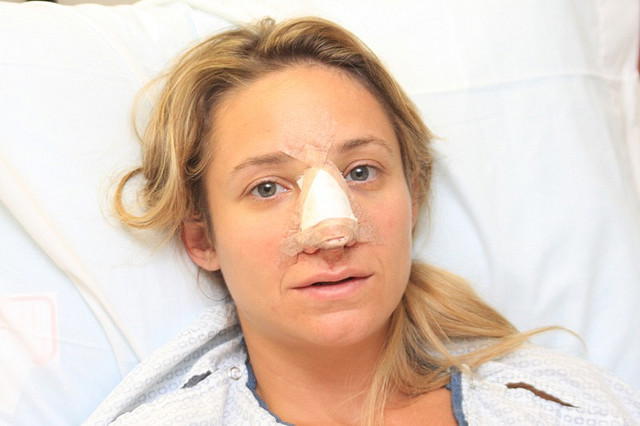
Want a Nose Job? You May Have a Mental Illness – Study Says 1 in 3 Who Seek Rhinoplasty Suffer from Body Dysmorphic Disorder
A third of people asking for a nose job have a mental illness called body dysmorphic disorder (BDD).

Belgian researchers at the University Hospitals Leuven say that 1 in 3 people seeking a nose job suffer from a mental illness called BDD.
BDD sufferers obsess about any real or imagined faults in their physical appearance to the point that their obsession interferes with an ability to live a normal life, or in some cases – to even leave the home.
To determine the prevalence of BDD in those seeking rhinoplasty, the Belgian researchers surveyed 266 patients at the hospital who were seeking a nose job over a 16 month period. They found that:
- 33% of those seeking a nose job had symptoms of BDD
- When a person sought a nose job for a genuine medical reason, the prevalence rate of BDD was only 2%
- Of those seeking a nose job for purely cosmetic reasons, the prevalence rate of BDD rose to 43%
- People seeking rhinoplasty who had had previous cosmetic surgery were significantly more likely to display symptoms of BDD as were those seeking a nose job who suffered from other types of mental illness.
- BDD severity is not related to actual physical attractiveness. Based on an objective evaluation of the noses of those seeking cosmetic surgery. People with BDD who were the most upset and obsessed about a physical defect that needed correcting did not necessarily have more need for surgery than those with only minor symptoms of BDD
BDD is estimated to affect between 1% and 2% of the general population and as many as three quarters of those who suffer from BDD have co-occurring depression.
Problematically however, since BDD is mostly in the mind and not based on physical reality, people with the disorder who get plastic surgery are rarely happy with the results and often request more cosmetic surgery to correct ongoing dissatisfaction.
Dr. Phillip Haeck, a plastic surgeon in Seattle weighed in on the need to screen people for BDD before surgery, saying, The biggest mistake is to offer to operate on them, because the chances that they will be satisfied afterward, no matter how good the shape of the nose may be, are very low,"
More like this

Social Contagion: Living with a Person at Risk of Depression May Increase Your Risk As Well
At certain periods in life, living with a person who uses maladaptive thinking styles increases your risk of depression. Fortunately, the opposite is also true.

Teen Stress Linked to Adult Mental Illnesses like Major Depression and Schizophrenia
For people already predisposed to mental illness (people with mental illness in the immediate family, for example) experiencing stress during adolescence likely increases the risk of experiencing mental illness as an adult.

Research: To Purge Negative Thoughts, Just Write Them Down and Throw Them in the Trash
Unwanted negative thoughts – researchers say you can eliminate their power by writing them down on paper and then throwing that paper in a trash can.
Acts of Kindness Reduce Social Anxiety and Increase Happiness
Researchers say that not only do random acts of kindness make us feel happier; they can also reduce the severity of social anxiety disorder symptoms.

Aspirin and Ibuprofen Nullify Effects of Popular Anti Depressants
Although in 2010 Americans filled 254 million prescriptions for SSRI anti depressants (like Zoloft, Prozac and others) a significant percentage of people taking these medications experienced little benefit. Researchers out of Rockefeller University think they know why – saying that common over the counter pain medications, like aspirin or ibuprofen, may nullify the effects of SSRIs.