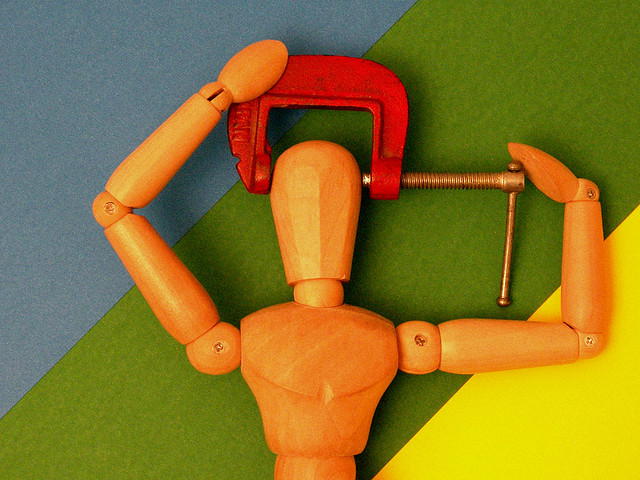
Is Stress Making You Sick? 33 Medical Conditions Caused or Worsened by Stress
Feeling stressed out? Well, if that’s how you feel on a regular basis you might want to think about making some lifestyle changes, before that stress load starts to compromise your health.

In an abstract way you know that your work stress can’t be beneficial to your health – but do you how many medical conditions are linked to excessive stress?
Not sure? Well here’s a short list of 33 stress linked medical conditions. Read on to see if your stress load might already be affecting your health and consider while you’re at it if whatever it is that causes you such stress is worth compromising your health over.
33 Stress Linked Mental and Physical Health Conditions
1. Heart attacks – acute stress can trigger heart attack in susceptible people
2. High blood pressure
3. Arrhythmia – acute mental stress can cause arrhythmia
4. Atherosclerosis
5. Obesity – stress increases levels of the hormone cortisol and elevated cortisol levels lead to increased belly fat storage. Retaining too much belly fat increases your risk factors for cardiovascular disease (more so than fat stored in other areas of the body). Stress may also prompt ‘comfort eating’
6. Reduced immune function – more likely to get colds etc. as well as more serious infections
7. Worsened GERD or peptic ulcer
8. Worsened IBS
9. Alzheimer’s disease – in animal model studies, stress is shown to accelerate the progression of brain lesions.
10. Headaches – stress is a very common cause of headache and the way we tend to tense up muscles when stressed will exacerbate an existing headache
11. Diabetes – stress worsens diabetes by increasing glucose levels. The adrenaline and cortisol release during a moment of stress also cause the release of a burst of glucose in the blood – for instant energy in a moment of crisis. It may also cause people to engage in other behaviors which worsen diabetes, such as drinking or eating to excess.1
12. Asthma – stress can lead to shortness of breath which can trigger asthma. Stress may also lead to immunocompromise which can worsen or even cause asthma. 2
13. Sleep problems (insomnia) – Stress can cause hyperarousal and this can make it hard to fall asleep, hard to stay asleep and it can affect the overall quality of any sleep that you do manage to get3
14. Depression – Chronic stress is linked with depression in a number of ways. It can cause reduced levels of neurotransmitters like dopamine and serotonin and elevated levels of stress hormones like cortisol and this can result in a disruption of the regulation of everything from mood, to sleep to energy. Chronic stress can also lead to the adoption of lifestyles, like drinking alcohol to excess, which also increase the risk of depression and other mental illnesses. 4
15. Anxiety
16. Muscle tension and pain – Usually in the shoulder, neck and head regions5
17. Chest pain
18. Fatigue
19. An increased likelihood of substance abuse and tobacco use
20. A worsening of preexisting skin conditions, like eczema6
21. Memory problems – In times of stress the body secretes the stress hormone cortisol. Cortisol interferes with the functioning of neurotransmitters normally used to retrieve memories (which is why your mind can sometimes go blank in very stressful situations) and it also depletes the brain of glucose (the glucose is sent to the body to ready a fight or flight reaction.) This depletion of glucose in the hippocampus impairs the formation of new memories. Excessive cortisol in the brain over a long period of time is also linked to the degeneration of the hippocampus, the brain’s memory center.7
22. Trichotillomania – pulling out hair or picking at skin
23. Hair loss/baldness – Stress can cause two types of hair loss: alopecia areata and telogen effluvium. The good news though is that stress-caused hair loss isn’t necessarily permanent, and if you can reduce the stress in your life you might even see hair re-growth in bald areas.8
24. Worsened acne
25. Psoriasis
26. Chronic obstructive pulmonary disease
27. Painful menstruation
28. Erectile dysfunction
29. Fertility problems
30. Lower back pain9
31. Worsened rheumatoid arthritis – Stress may increase the perception of arthritis pain10
32. Nausea and Diarrhea
33. Increased Incidences of Herpes outbreaks – research shows that for infected people, prolonged elevated stress is associated more frequent outbreaks. Occasional acute stress is not11
References
- 2. Stress and Asthma
- 3. National Sleep Foundation: Stress and Insomnia
- 4. WebMD Stress and Depression
- 5. Stockholm University: Stress Induced Muscle Pain (su.avedas.com, 2012)
- 6. Mayo Clinic: Stress Management
- 7. The Franklin Institute: Stress and the Brain
- 8. Mayo Clinic: Stress and Hair Loss
- 9. WebMD Stress Management
- 10. NIH: Rheumatoid Arthritis
- 11. AMA: Persistent Stress as a Predictor of Genital Herpes Recurrence
Editor’s picks
How Stress Erodes Your Memory – And What You Can Do to Improve Your Recall
Stressed out and wondering why you’re so forgetful these days? Try stopping to smell the roses for a change and see if your memory doesn’t improve a bit… Learn more about how chronic stress impairs your ability to form and retrieve memories and learn how chronic stress destroys brain cells and leads to accelerated age-related memory loss; and most importantly, learn what you need to do to protect yourself from this type of cognitive decline.

Noise and Stress – How Environmental Noise Levels Can Spike Your Stress Load
Need to cut your stress load but not sure where to start? Well, if you live or work in noisy surroundings your environment may affect your physiological stress response in ways you’re not even aware of. Reduce some of the noise pollution from your life and see if you don’t feel a little more of the serenity you’re after!

Taking Care of Yourself When a Loved One Has Bipolar
Living with a person with bipolar is overwhelming. We often neglect ourselves and this can lead to burnout. Here are some tips for caring for yourself when the goal is to help a love one who has bipolar disorder.

Reverse the Health Consequences of Chronic Stress with ‘The Relaxation Response’
Could 10 minutes a day save your life? You can’t avoid stress, but if you’re smart, you can use techniques like ‘the relaxation response’ to offset the chronic health consequences. Read on to learn how to get started…

Maintaining Boundaries: How to Say "No" with Compassion
Setting boundaries and limits and saying "no" are some of the hardest things for many people to do. Learning to say "no" without guilt, shame or anger is a necessary life lesson in for living an emotionally healthy life. Setting boundaries and limits is about taking care of yourself at least as well as you might take care of anyone else.