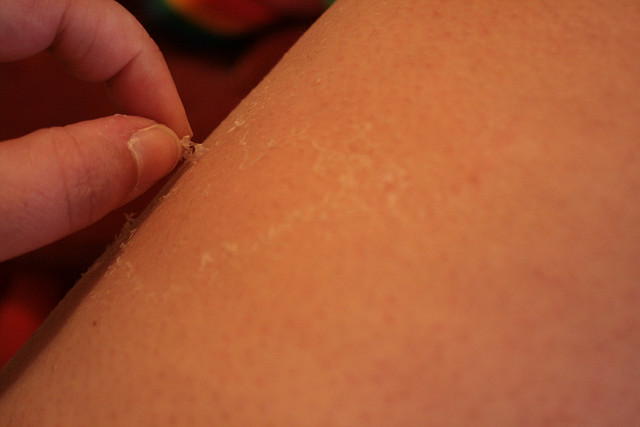
Skin Picking Disorder
If you pick at your skin long and hard enough to cause sores or lesions on a re-occurring basis and you feel distressed about your habit and/or your inability to control your picking habit, then you may have skin picking disorder (dermatillomania) a treatable type of impulse control disorder. Learn more about getting diagnosed, the causes and consequences and the treatments that are used to reduce the severity of symptoms.

If you have skin picking disorder you can’t resist your impulses to pick at your skin. You probably spend a great deal of time each day either picking or hiding the effects of your actions and your skin definitely suffers lesions or tissue damage as a result. Your disorder causes you to feel embarrassed or ashamed and it interferes with your ability to lead a normal and happy life.
You may well feel tension before you pick and a sense of relief afterward and if you’re like most skin pickers you pick at your face using your fingers or tweezers – picking at real and imagined blemishes – often until you end up bleeding.
You almost certainly try to hide your disorder and its effects on your skin and if you’re like many with this condition you’ll avoid certain types of social situations to keep your affliction a secret.
Although doctors aren’t yet sure how to classify skin picking disorder (probably a subtype of impulse control disorder or obsessive compulsive disorder) no one denies the seriousness of the condition, the difficulty people with the disorder have in controlling their impulses and the need for treatments that can help.
Skin picking disorder is also sometimes called dermatillomania or copmpulsive skin picking.
Diagnosis – Do You Have Skin Picking Disorder?
Although not currently in the American Psychiatric Association's Manual of Mental Health Disorders, the DMV-IVr, it is under consideration for addition to the upcoming DSM-V edition.
Based on the criteria under consideration for inclusion into the upcoming manual, to meet a diagnosis of skin picking disorder you must:
- Engage in re-occurring bouts of skin picking and this picking must result in tissue damage or lesions
- Feel or experience significant distress or impairment in social, occupational or other important life-area functioning as a result of your skin picking disorder
- Not pick as a result of substance use or abuse (cocaine or methamphetamine use, for example) nor pick as a result of a medical condition, like scabies
- Not
have another mental health disorder which better explains the skin
picking, such as body dysmorphic disorder or delusional disorder
Basically, if you find that you chronically skin pick, your skin picking results in noticeable cuts or lesions, your skin picking is interfering with your quality of life and no other medical or psychiatric condition better explains your actions – then you have skin picking disorder.
Skin Picking: Causes, Consequences and Treatments
I Pick My Skin a Little – Do I Have a Problem?
Everyone picks their skin to some degree and at some point, and clearly not everyone who occasionally picks at their skin has a problem that requires treatment. Whether or not your skin picking has become a serious problem, a clinical problem, depends on:
- The amount of time you spend picking
- The damage your habit does to your skin
- How bothered you are by your habit
Basically, if you’re bothered by your habit, can’t control your impulses to pick and find that your habit is causing you skin or social problems, then you have a problem that requires treatment.
How Common Is Skin Picking Disorder?
The true prevalence of the disorder in the general population remains unknown. In one study, 2% of dermatology patients and 4% of college students picked their skin to the point of tissue damage and social impairment.4
Why Do People Skin Pick?
Skin picking sessions may be conscious or unconscious, and people report skin picking for a variety of reasons, such as:
- Seeking to eliminate blemishes – Many people who skin pick spend considerable time looking into mirrors and trying to eliminate, with fingers or with tweezers – real or imagined blemished on skin, mostly on the face. This prolonged picking attention invariable worsens the blemish site, which can lead to further sessions of picking
- Boredom – Many skin pickers will pick when bored or sleepy, as a form of self stimulation
- Stress – Many skin pickers report feeling tension or stress before picking and relief or gratification immediately after. Many people come to use the relief afforded by skin picking to deal with life stressors in general2. In addition to stress relief, some people will skin pick as a way of coping with other negative emotions, like fear, sadness, guilt etc.
The Consequences of Skin Picking
Some of the harms frequently experienced by those with this disorder include:
- Anxiety and depression (frequent co morbidity)
- Sores, scars and possible disfigurement (in some cases skin picking can result in sores that require surgery to treat)
- Embarrassment/shame
- Social withdrawal (people may pass on social activities out of embarrassment over their skin)
- Infection (with open sores the risks of bacterial infections go up significantly)
- Pain after or during a picking session3
Skin Picking Disorder Treatments
The most common treatments for skin picking disorders are differing forms of cognitive behavioral therapy (CBT), like stimulus control or habit reversal training.
- Habit Reversal Training – is a type of CBT that teaches you to become more aware of environmental, emotional and behavioral triggers that often lead you to skin picking. Once you gain a better awareness of what makes you skin pick, you can then learn techniques to overcome your skin picking impulses, such as minimizing your exposure to environmental triggers. For example, If you find that you often skin pick while watching TV alone, then you might be encouraged to avoid this activity
- Stimulus Control – is a type of CBT that teaches you to employ certain strategies in response to urges to pick at your skin. Examples might be wearing band-aids on your fingers or minimizing your exposure to situations, like watching TV or looking closely in the mirror, that frequently cause you to skin pick.
In some cases, medications like SSRI anti depressants and other medications may also be used, often in conjunction with psychotherapy, to help control the symptoms of the disorder.4
References
- 1. The Trichotillomania Learning Center – Skin Picking FAQs
- 2. Brain Physics: Skin Picking (brainphysics.com, 2010)
- 3. OCD Foundation: Skin Picking Disorder Fact Sheet
- 4. The Trichotillomania Learning Center – Skin Picking Treatments
Editor’s picks

Intermittent Explosive Disorder
If you have intermittent explosive disorder you experience uncontrollable bouts of rage that last 10 or 20 minutes, that often result in violence or destruction of property and which are way out of proportion to the situation or the provocation. Your disorder almost surely reduces your quality of life and it may cause you to lose your job or get expelled from school, have trouble maintaining friend or romantic relationships – or it may even land you in jail. Fortunately, for those that seek treatment, help is available and you can learn to get better.

N-acetylcysteine (NAC) – An Effective Supplement for Trichotillomania and Other Impulse Control Disorders?
Could an inexpensive over-the-counter amino acid supplement really help you best your hair-pulling, skin picking, nail biting or other form of impulse control disorder? Initial research suggests that it just might.

Compulsive Buying Disorder
People with compulsive buying disorder buy when they feel down and they buy to good – unfortunately, those good feelings are quickly replaced by guilt, remorse and by ever more financial problems and credit card debt. If you think you’re a ‘shopaholic’ you may well have a mental health disorder that’s not going away on its own.

Obsessive Compulsive Disorder (OCD)
The facts about OCD - What it is, making a diagnosis, understanding who is at risk and learning about effective treatment options.
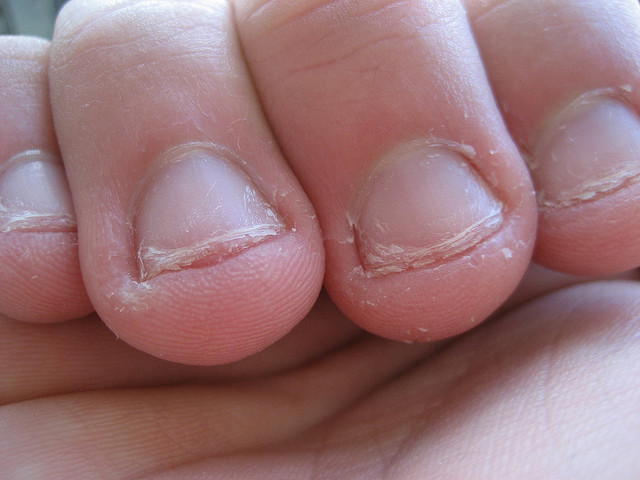
Onychophagia – Nail Biting
Are you one of millions that continue to bite your nails into adulthood? Find out more about nail biting and learn what you can do on your own to overcome you ‘habit’. Find out also about medications and psychotherapies that are also available for those that can’t break free on their own.