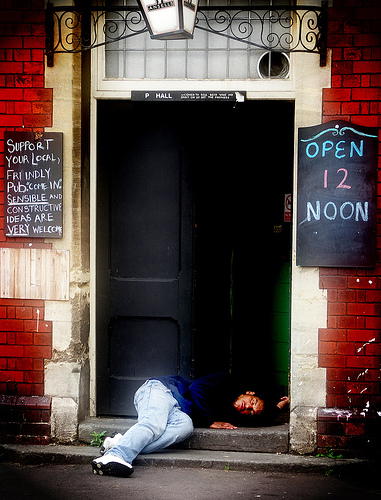
Scotland Considers Mandatory Minimum Price Per Drink to Curb Alcohol Abuse
Sheffield University researchers say that in Scotland, legislating a mandatory minimum price per drink of 40p (63 US cents) would save up to 370 lives per year and save the government hundreds of millions of pounds.

Scotland’s problems with binge drinking and alcoholism rank it among the most alcohol troubled of developed world nations. Some experts say that very cheap alcohol exacerbates these problems and that a legislated minimum price per drink might decrease some of the worst abuses.
To investigate this proposal, the Scottish government commissioned an academic study on the predicted consequences of minimum drink pricing; and researchers out of Sheffield University found that a minimum price per drink of 40 pence would:
- Save 70 lives in the first year after implementation and 370 lives per year after 10 years
- Save the government 160 million pounds in alcohol related health care costs over the next 10 years
- Lead to 30 000 fewer alcohol caused sick days from work each year
The researchers say that a minimum price per drink of 50p would have even greater positive effects.
Under the proposed 40p per drink pricing, a bottle of wine would need cost a minimum of 3.60 pounds. The researchers say that people who drink moderately priced alcohol would notice little difference in cost with minimum pricing, but that people who abuse very low cost alcohol, like high alcohol cider, would see substantial cost increases.
Should Scotland decide to proceed with legislated minimum alcohol pricing they would be the first European country to do so, and they won’t pass any such law without a fight from many opposition MPs who oppose the idea. Liberal Democrat Robert Brown described his problem with mandated minimums saying, "Minimum pricing won't tackle the cycle of deprivation that often drives people to drinking cheap, high strength alcohol in the first place.” Other critics have pointed to the high costs of alcohol in Scandinavian countries that still face substantial alcohol related problems.
Scottish Chief Medical Officer, Harry Burns, disagrees, saying, "All the evidence suggests that if you want to reduce alcohol-related harm, you need to look at price and availability, which are the key drivers of consumption. I've got to admit that initially I was sceptical about minimum pricing but when you look at the facts, it becomes a no-brainer."
More like this

Survey Reveals That Boredom Drives British Teens to Drink
A British charity survey reveals that teenagers with nothing to do are likely to take advantage of low cost alcohol to get drunk over the summer holidays.

The More Often You Drink, the More Often You'll Binge Drink - Say Canadian Researchers
People who drink a glass of wine or a beer a day, a few times a week, binge drink more often than occasional drinkers.

Baby Boomers Still Binge Drinking
Duke University researchers say that baby boomers and those 65+ are binge drinking in high numbers.

Knowing How Much Less Other Students Drink Helps Heavy Drinking College Students Cut Back
College students who drink heavily often wrongly believe that their peers drink equivalently, but when heavy drinking college students receive accurate information about the quantity consumed by peers; they reduce their own drinking.

Reduce Cancer Incident Rates by 35% By Reducing Societal Binge Drinking.
Jim Bishop, of the Australian Cancer institute, claims that 35% of cancer cases could be eliminated by a change in public drinking behaviors.