
Too Much Virtual Play May Affect Real World Performance
Researchers at the University of Kansas suggest that video game addicts who play more than 7 hours per week get almost 2 hours less sleep per night and struggle with fatigue during the day.

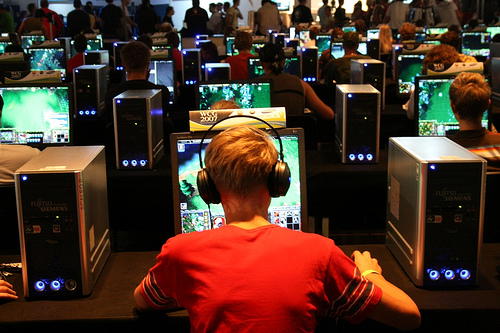
In the 24/7 technological age, it is never difficult to find someone to play video games with, whether that person lives down the street or on the other side of the world. This ready availability of gaming opportunities is just one factor leading to addiction for many college students, leading to lack of sleep and compromised daytime performance.
But while students are ready to admit an addiction, new research revealed this week suggests that many do not perceive it to be responsible for weary days spent trying to stay awake. The research, undertaken at the University of Arkansas in Little Rock, found that nearly an eighth of a sample group of 137 students admitted an addiction to gaming, while only close to 11 per cent felt that gaming affected their sleep.
Amanda Woolems, the leader of the research team, said that those who confessed to an addiction had a higher score on the Epworth Sleepiness Scale but only a third of these felt there was a correlation between their gaming addiction and any sleep interference with which they were suffering.
The statistics showed that college students who enjoy playing video games in excess of seven hours every week, and feel their hobby is actually an addiction, have almost two hours less sleep per night in comparison with students who do not play, or only game occasionally. Inevitably, such addict gamers find it difficult to stay awake during the day, thus failing to function to the best of their abilities.
Sleep expert Dr Alexandre Rocha Abreu, an Assistant Professor in the Division of Pulmonary, Critical Care and Sleep Medicine at the University of Miami Miller School of Medicine in Florida, was unsurprised at the statistics revealed by the Kansas study.
He went on to suggest that it is more than the excitement of gaming that prevents regular players from sleeping well; the environment in which they spend much of their time is also conducive to sleep loss. Frequently, gamers spend their playing time in rooms with a great deal of indirect light emanating from the TV and computer screen, and the latter in particular provides a simulation of sunlight, thus delaying the sleep phase in the gamer regardless of the time.
The resulting lack of sleep can lead to a certain amount of debilitation in the daytime function of regular games. “These people may have some cognitive impairment,” Abreu said.
More like this
Adult Video Gamers Are Heavier, More Introverted and More Likely Depressed
Researchers at the CDC conducted a snapshot study of American adult video gamers, and found that on average, video game players have higher BMI scores, women gamers are more likely depressed and all gamers (on average) rely on the internet for social support at the expense of real world sociability.

College Class to Study Only Alcoholic Writers
U Mass Professor Michael Carolan leads students in an exploration of the influence alcohol has had on a century of America's greatest authors.

Online Alcohol Intervention Reduces College Drinking by 17%
College students who met the criteria for harmful drinking behaviors drank 17% less one month after participating in an easy web based alcohol intervention.

Students Who Drink Alcohol at Greater Risk For Sexual Assualt
University students who drink alcohol to excess face a greater risk of violent or sexual assault. Critics say - don't blame the victim!

Knowing How Much Less Other Students Drink Helps Heavy Drinking College Students Cut Back
College students who drink heavily often wrongly believe that their peers drink equivalently, but when heavy drinking college students receive accurate information about the quantity consumed by peers; they reduce their own drinking.