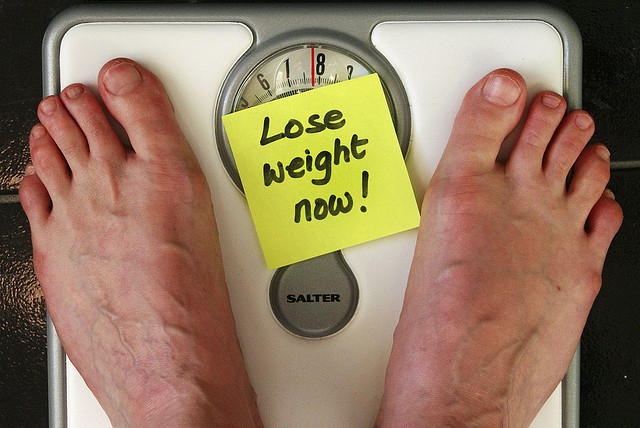
Financial Incentives and Penalties Can Help People Stick with a Weight Loss Program and Lose More
Obese people rewarded with $20 for losing 4 pounds in a month were far more likely to lose significant weight than people given no such cash incentives.

It is incredible how a small cash incentive can help people achieve a goal they’d happily pay far more to achieve.
Reinforcement techniques are an effective, if controversial, technique known to increase the success of addiction treatment programs – for example, by rewarding the passing of drug tests with movie vouchers or restaurant gift certificates.
Well it turns out the same principle holds true for people enrolled in weight loss programs – in a study at the Mayo Clinic, participants who got a $20 reward for meeting weight loss targets each month were far more likely to lose weight than people who received no such incentives.
The Study
A group of obese Mayo Clinic employees agreed to participate in a 1 year weight loss program study.
Half of the participants were told they’d get a $20 reward for each month they achieved a 4 pound weight loss (up to a target weight) but they’d have to pay a $20 penalty for each month they failed to lose at least 4 pounds.
The other half of the participants received no financial rewards or penalties.
The Results
62% of participants in the financial reward group achieved their target weight, compared to just 26% of those in the no-reward group.
Participants in the financial reward group lost an average of 9.08 pounds compared to just 2.34 pounds lost by those in the no-reward group.
Participants in the incentive group were more likely to continue on with the program. Surprisingly, even participants who paid the $20 failure penalty each month were more likely to stay enrolled than people in the no incentive group.
Commentary
Lead study author Steven Driver, M.D. commented on the significance of the findings, saying, "The take-home message is that sustained weight loss can be achieved by financial incentives. The financial incentives can improve results, and improve compliance and adherence."
More like this

Yoyo Dieting Leads to Drug Withdrawal-Like Stress Response
Researchers at the Scripps Institute say that not only does Yoyo dieting fail to induce lasting weight loss, it can actually trigger a drug withdrawal-like stress response in the brain that can lead to overeating and weight gain.

'Flat Tummy' Fury
At a time when there seems to be more of an emphasis on female empowerment than ever before, messages of shame related to body size still permeate our culture.

Older Women Continue to Struggle with Disordered Eating and Body Image Problems
Although we may think eating disorders are a young person’s problem, new research out of The University of North Carolina demonstrates that even after 50, women are still very prone to disordered eating and body image problems.

Study Finds Linkage between Diet Drinks and Depression
In a study which shows an association, but no causality – researchers find that people who drink 4 or more cans of diet soda per day are 31% more likely to get depression than people who do not drink sweetened beverages.

Researchers Say Brazilian Diet Pills Are Dangerous
Researchers at Harvard Medical School say that the Brazilian diet pills used by million of Americans can contain pharmaceutical substances (like amphetamines) and can be dangerous and addictive.