
People Who Smoke Strong Marijuana Are 7 Times More Likely to Become Psychotic
Researchers have long known of the link between marijuana and an increased risk of psychosis, but no one knew just how significant that risk might be or how the type of marijuana smoked might influence the outcome. British scientists now say that people smoking very strong ‘skunk’ marijuana are 7 times more likely to experience psychosis than people smoking lower potency cannabis.

British Doctors at the Institute of Psychiatry in London have just published findings of a research study done on the marijuana use of 280 patients admitted to their hospital for a first incidence of psychosis.
The doctors wanted to learn what, how much and for how long these patients had been using before succumbing to an initial psychotic experience. The doctors then compared the drug use data of these psychotic patients to the use amongst a group of 174 healthy control subjects.
The Results:
- Of the 280 patients admitted for a psychotic episode, nearly 80% were heavy skunk marijuana users
- Psychotic patients were twice as likely to have been smoking for longer than 5 years and 6 times more likely to be daily smokers
- Psychotic patients were 7 times more likely to smoke potent skunk marijuana than control subjects
- There was no difference in percentage who had used or age of first use between the psychotic and control groups
The researchers say that they suspect that an imbalanced chemical makeup of high potency marijuana may be responsible for an increased risk of psychosis.
There are 2 active substances in marijuana, 9-THC and cannabidiol. Cannabidiol is thought to play a protective, anti-psychotic role, protecting smokers from the psychotic properties of 9-THC. Doctors say that new high potency marijuana contains a greatly elevated quantity of 9-THC, the chemical that produces the intoxication, but that quantities of cannabidiol remain minimal.
Of samples collected in the London area:
- Hash had a 9-THC content of 3.4% and a cannabidiol content of 3.4%
- Skunk had a THC content of 12-18% and a cannabidiol content of 1.5%
In London today, 80% of the cannabis sold is high potency skunk marijuana.
Study author, Dr. Marta Di Forti commented on the significance of the results by saying, “Our study is the first to demonstrate the risk of psychosis is much greater among frequent cannabis users, especially among those using skunk, rather than among occasional users of traditional hash.”
The full research results can be found in the British Journal of Psychiatry.
More like this

Daily Marijuana Smoking Linked to Psychosis
Marijuana is a known risk factor for the development of psychotic disorders, such as schizophrenia. However, Emory University researchers say that it’s not whether or not a person uses marijuana, but rather how quickly an adolescent user progresses to daily marijuana use that’s most important as a predictor for psychosis.

Marijuana Protects "Stressed" Rats from Opiate Addiction
Rats that grow up in stressful environments get addicted to opiates more easily than rats that grow up under normal conditions. However, if "stressed" rats are given high doses of THC (the active ingredient in marijuana) during adolescence they become far less addicted to opiates given later in life.
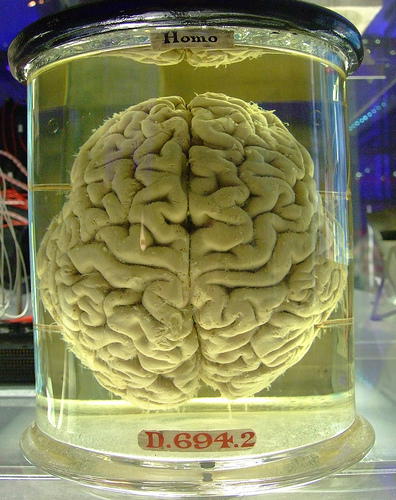
Heavy and Long-Term Marijuana Use Causes Brain Shrinkage
Australian researchers have found that heavy marijuana smoking men exhibited significant brain shrinkage in the hippocampus and the amygdala.
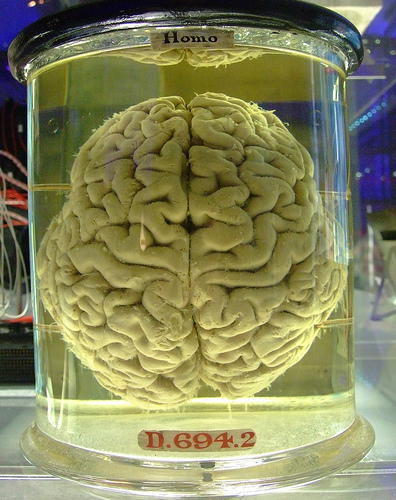
Heavy and Long-Term Marijuana Use Causes Brain Shrinkage
Australian researchers have found that heavy marijuana smokers exhibited significant brain shrinkage in the hippocampus and the amygdala.

Using Marijuana before the Age of 15 Increases Risk of Psychotic Disorders
Teens that start smoking marijuana before the age of 15 are twice as likely to develop a psychotic disorder by the age of 21 as teens that don’t smoke marijuana.