Beer Pong Spreads H1N1 – Say College Officials
With 21 students now infected, students at Rensselaer Polytechnic in New York State have been asked to stop playing the drinking game ‘beer pong’, which officials suspect may have spread the virus.

Health officials at Rensselaer Polytechnic Institute in Troy New York have asked students to stop playing beer pong, after the drinking game was implicated in the spread of H1N1 between university students last weekend.
The college currently has 21 reported cases of swine flu, as well as an additional 7 students in isolation at present who are potential cases.
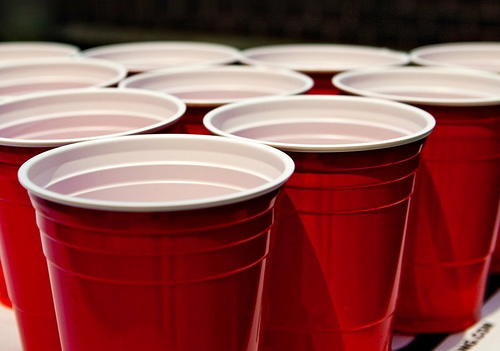
Beer pong is a drinking game in which players toss ping pong balls into the cups of opposing players. The virus is transferred from the hand to the ball to the cup – and then consumed, causing virus transmission.
The University’s health center has announced that H1N1 vaccines are scheduled to arrive at the school within weeks.
In addition to the direct transfer of the virus via drinking games, partying with excessive alcohol may increase a person’s general susceptibility to infection. Research earlier this year published in the journal BMC Immunology, indicates that a single session of binge drinking suppresses immune system function for about 24 hours thereafter.
More like this
Drinking Games and Toga Parties – New Research on College Binge Drinking
Not entirely surprisingly, college students participating in drinking games tend to get drunker than those that don't.

Australian Police Limit Racing Fans to a Scant 24 Cans of Beer per Day
Australian racing fans are up in arms about tough new police restrictions that limit the amount of alcohol permitted around the racetrack of this weekend’s Bathurst 1000 to only 24 cans of beer per person…per day!

Knowing How Much Less Other Students Drink Helps Heavy Drinking College Students Cut Back
College students who drink heavily often wrongly believe that their peers drink equivalently, but when heavy drinking college students receive accurate information about the quantity consumed by peers; they reduce their own drinking.

Little Change in Drinking Behaviors at “Party Schools” Since 1993
American colleges that dealt with problem drinking in 1993 had equally problematic drinking in 2005.

Scientists Understand College Drinking Better, But College Drinking Fatalities Continue to Rise
Despite research over the past number of years that has produced a greater understanding of the kinds of interventions that reduce excessive drinking on college campuses, the fatality and binge drinking rates continue to rise.